
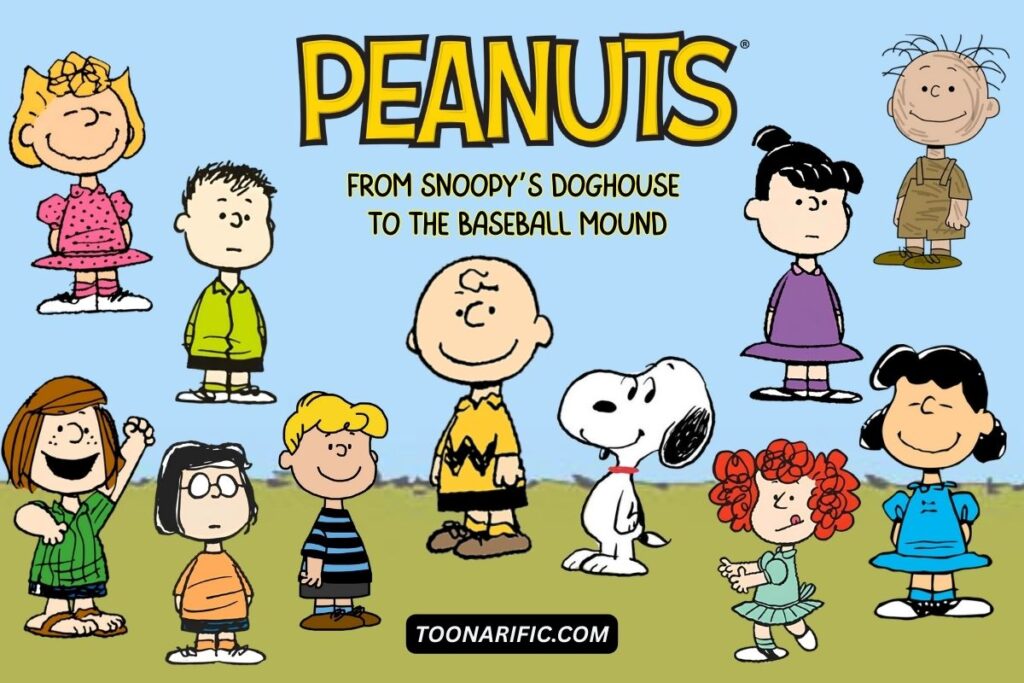
In the world of comic strips, few names evoke the warmth, wit, and whimsy of Peanuts. This long-running series introduced us to a quirky ensemble of children and one extraordinary dog who helped us make sense of growing up, failing forward, and finding joy in the everyday. The Peanuts gang has remained relevant, relatable, and irresistibly lovable for over 70 years. Wanna meet Charlie Brown and other Peanuts characters again?
In This Article:
What Makes Peanuts So Timeless?
Launched in 1950 and running until Schulz’s final strip in 2000, Peanuts became more than just a daily cartoon. It evolved into an iconic touchstone in popular culture. Its clean aesthetic, emotionally nuanced storytelling, and surprisingly philosophical musings resonated with readers of all ages. What made the Peanuts strip revolutionary was its ability to mirror real human struggles through the lens of children, often touching on anxiety, hope, friendship, and identity.
And at the center of it all? A list of characters who each brought something different to the table, often a laugh, sometimes a tear, but always a sense of humanity.
Names Of The Peanuts Characters You Know And Love
Charlie Brown
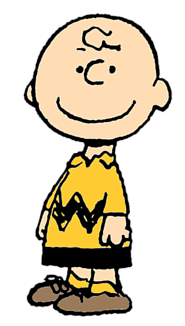
Charlie Brown is the soul of Peanuts, a silent, dogged, insecurity-riddled force of will. By way of introduction to his iconic round head and zigzag-striped shirt, he embodies the daily travails of childhood (indeed, of life) with uncommon emotional range.
But he stands firm in his efforts. And what is so lovable about Charlie Brown is his relatability: the way he thinks through disappointment, with introspection and, at last love. Despite exclaiming “good grief” at the famous “Peanuts”-two-steps-ahead-of-him predicaments he finds himself in, he’s still, essentially, kind and reflective and dedicated to trying to do what’s right. His loneliness and sensitivity serve as a lens through which the audience experiences vulnerability, resilience, and the human desire for connection.
Snoopy
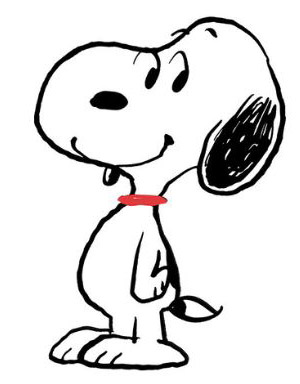
Naturally, Snoopy is just a normal pet from the outside, but it doesn’t take long to realize he’s anything but. Underneath the droopy ears and downcast eyes is a fantastically vivid imagination. Snoopy is impossibly independent and yet has very strong loyalties to Charlie Brown, to Woodstock and to whole group of Intellectual Property characters who are his fellow Beagle Scouts.
His typewritten musings, “It was a dark and stormy night…,” send up both literary ambition and artistic angst. Snoopy may not speak out loud, but his actions and thought bubbles contain wisdom, wit and escapism. He embodies the childlike ability to dream big, reminding us that imagination is a refuge and a weapon against the ordinary.
Peppermint Patty
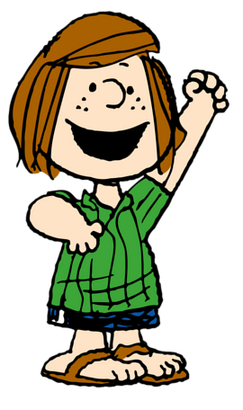
And Peppermint Patty, with her rat’s nest of hair, sandals and adorable swagger, is anything but stereotypical! She’s feisty, sports-inclined and is constantly mistaken for a boy because of her nickname and rough-and-tumble ways. But underneath that tomboy cover is an emotional girl who isn’t quite sure how to show love, particularly for “Chuck” (Charlie Brown), towards whom she clearly has high regard.
It’s not her contradictions that make her interesting, but her vulnerability: it’s the moments in which she confides in Marcie, or feels left out, that underline the emotional currents swimming beneath her brash surface. Peppermint Patty is a reminder that strength and softness often go hand-in-hand, and that true confidence comes from embracing both.
Shermy
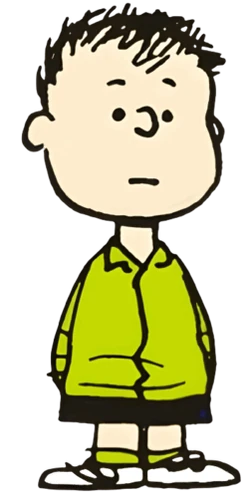
Though he faded out of existence as the strips moved on, they helped establish the relational dynamics that would come to define the Peanuts strip. In those early days, he acted as either a foil or a friend to Charlie Brown and provided plain, unvarnished commentary to a more complex world. He was felt to be clean-cut, reasonable and a little bit above it all, a straight man among the more eccentric roommates who would be introduced in subsequent years.
Shermy is the evolution of the comic strip. His gentle disappearance subtly exists on the axis of friendship evolving, priorities altering. Though he eventually became a background character, Shermy’s quiet reliability and early contributions to the Peanuts ensemble remain an integral part of its history.
Violet Gray

Violet Gray is known for her arrogant attitude (in some strips she brags about her life and how she was better than everyone else simply because she was a girl) and fur coat, she frequently boasts about her dad’s easy ability to earn money, as well as how good a person she is because she has a large wardrobe.
She has materialistic tendencies and doesn’t fail to use her father’s job and the luxurious nature of her upbringing to use as ammo in attempts to jockey for position in the social strata, specifically when it comes to belittling Charlie Brown and other, less forward members of her class. Violet continues to identify with girls such as Lucy and Patty in order to maintain her position as head girl of a schoolyard clique.
Lucy Van Pelt
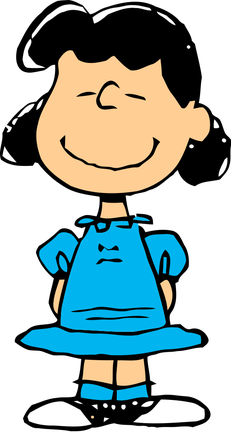
It is Lucy, the loud, brassy dictator of the Peanuts world, the alpha personality. Whether she’s running her legendary five-cent psychiatric booth or snatching the football away at the last second when Charlie Brown tries to kick it, Lucy’s all about being in control.
Her interactions can be matter-of-fact to the point of cruelty where there’s an interesting dynamism underneath. Her unreciprocated love for Schroeder reveals a more tender, yearning side, and her occasional jealousy or outbursts with her brother Linus hint at deeper emotional vulnerabilities. Lucy embodies the paradox of someone who masks her own insecurities with dominance, making her both infuriating and fascinating.
Linus Van Pelt
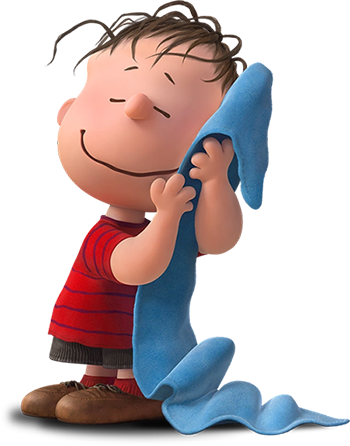
Linus is a bit younger than most of the main group, but he’s usually quite a bit smarter and emotionally more intelligent than most of them. Rotating in those crotch circles, clutching his ever-present blankie, Linus is a picture of innocent vulnerability. Yet his ponderous, frequently theological monologues and moral absolutism lend him the aura of a sage.
He is most famous for his steadfast belief in the Great Pumpkin, an enigmatic being he worships with a fanatical fervour every Halloween. This ridiculous notion, which seems to be laughed at, demonstrates Linus’s capacity for faith and imagination.
Schroeder
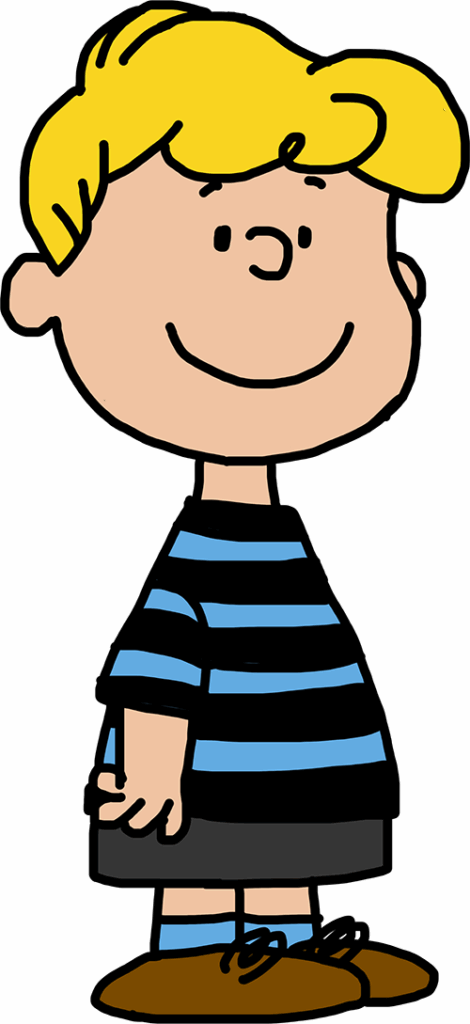
Schroeder is an artist at heart, virtually always found standing by his little toy piano and methodically playing Beethoven songs with an intense focus. His reverence for classical music makes him distinctive among the Peanut gang, a stand-in for duty and artistic integrity.
Lucy has a blatant crush on him, but he is too focused on his music to notice her pining. This tension not only forms the basis of much of the strip’s humor, but also highlights Schroeder’s one-track-mindedness. As the catcher on Charlie Brown’s baseball team, he shows a more grounded, collaborative side, balancing his artistic detachment with a sense of responsibility and teamwork.
Pig-Pen
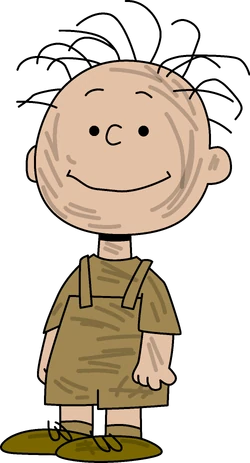
Pig-Pen is one of the most recognizable looking of the Peanuts characters, he is always surrounded by a cloud of dust and dirt. Though others may laugh at or avoid him because he’s dirty and unwashed, Pig-Pen has no shame in his game and says as much when he pointedly tells the gang that he’s “a dust magnet.” Although he may not be the most popular of the men at the tavern, his fine self-confidence proves that he is one of the most confident of them.
He doesn’t clean up, because he doesn’t feel the need to be different. This is a powerful, if understated, message about self-worth and identity. Though he appears infrequently, Pig-Pen always leaves a strong impression, embodying the idea that authenticity matters more than appearance.
Marcie
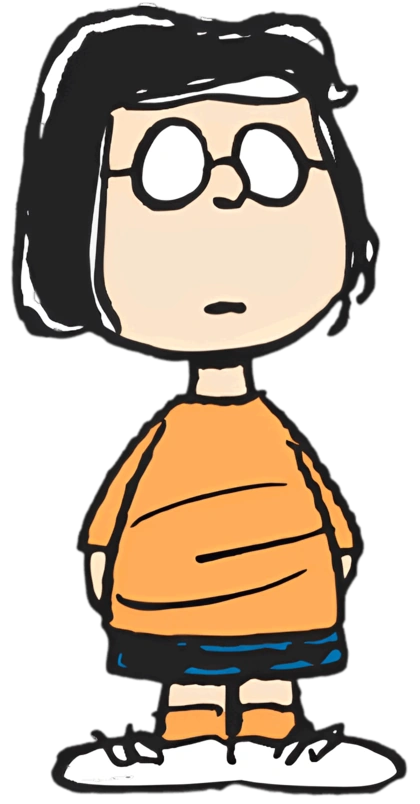
What Marcie is most famous for, other than her polite, bookish nature and the fact that she calls Peppermint Patty “Sir,” is her nearsightedness. Although appears to be timid, she has a quiet strength and is a moderate of sort in the madness around her.
It’s her intelligence and dry wit that set her apart as member of the Peanuts gang, when compared, say, with Peppermint Patty’s brashness and impulsiveness. Marcie’s unswaying loyalty and dry wit keep her around, and her cool introspection helps Schulz delve deeper into personality types rarely seen in children’s media at the time.
Sally Brown
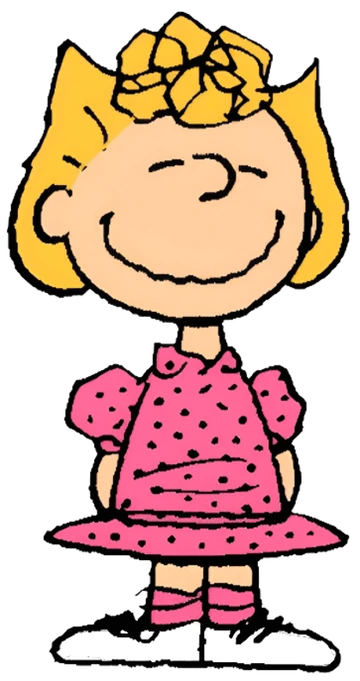
Sally Brown combines childlike innocence with a startlingly sharp tongue. Sally Brown is like a little-girl Hooper (minus the yelling). She is Charlie Brown’s little sister, and she tends to swing between idolizing him and lamenting her fate. Many of here school diatribes and malapropian linguistic fumbles provide welcome comic relief and new angles to the Peanuts strip.
Her humorous fanatical infatuation over Linus, whom she affectionately calls “Sweet Babboo” as her “secret” romantic entanglement just won’t leave him alone. Sally’s appeal is in her candor: She is never afraid to challenge the rules, to show resentment, or to see the world in her own whimsical way.
Frieda
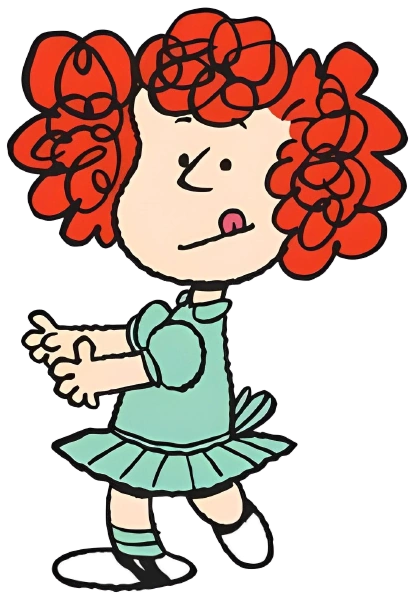
Frieda’s pride in her “naturally curly hair” is not just physical self-identification, it is Frieda. She carries a measure of vanity and old-fashioned propriety into the Peanuts gang, the one who can always be counted on to express an opinion on what everyone else ought or ought not to be doing, and especially Snoopy.
Frieda wants Snoopy to “go chase rabbits and act like a real dog,” whereas Snoopy is creative and independent. Though she was never a breakout character, Frieda embodies a struggle between the demands of society and individual freedom, especially when dealing with those who refuse to conform.
Woodstock

Tiny but spirited, Woodstock is Snoopy’s closest friend and sidekick in nearly all of his adventures. Though this yellow bird speaks in indecipherable squiggles, Snoopy understands him perfectly, symbolizing a bond that transcends language. From Beagle Scout expeditions to fantasy battles with the Red Baron, Woodstock is brave, resourceful, and surprisingly competent.
He brings out Snoopy’s nurturing side and often serves as the voice of practicality when Snoopy’s imagination runs wild. Despite his size, Woodstock carries immense emotional weight in the strip as a symbol of loyalty and enduring friendship.
Franklin
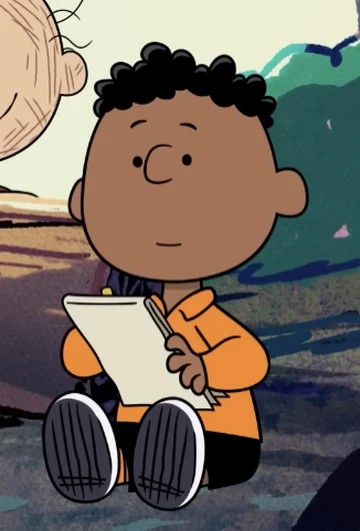
Introduced in 1968, Franklin broke new ground as the first Black character in Peanuts, a decision Charles Schulz insisted on despite pushback. Franklin is intelligent, even-tempered, and thoughtful, often providing a calm counterbalance to more neurotic characters like Charlie Brown.
He is portrayed as an equal among the gang, emphasizing unity over difference. While he didn’t appear in as many individual strips as others, recent adaptations like Snoopy Presents: Welcome Home, Franklin have enriched his story, showing his struggle with belonging and the power of kindness and connection. Franklin stands as a symbol of progress and empathy and Schulz’s quiet courage in pushing boundaries.
Charlie Brown Character List Of Unsung Heroes
Patty
One of the original Peanuts characters, Patty helped set the tone of the early strips. Often seen with Violet, she frequently teased Charlie Brown. Though phased out over time, she remains a core part of the comic’s early history.
Rerun Van Pelt
The youngest Van Pelt sibling, Rerun emerged with a dry wit and grown-up insights. Known for his tricycle rides and deadpan observations, he brought a mature, humorous voice to the later strips.
Charlotte Braun
Loud and short-lived, Charlotte Braun made a big noise in a few early 1950s appearances. Retired after reader complaints, she remains a memorable experiment in exaggerated personality.
Faron
Faron, Frieda’s limp and indifferent cat, offered a feline contrast to Snoopy’s liveliness. His noodle-like passivity became a subtle, offbeat joke about cat behavior.
Eudora
The last major character introduced, Eudora is quirky, soft-spoken, and often paired with Sally. Her whimsical misunderstandings bring gentle, surreal humor to the strip’s final years.
Lydia
Lydia perplexes Linus with her strange speech and ever-changing name preferences. Her oddball behavior and sporadic appearances make her a unique and comic mystery.
Spike
Snoopy’s desert-dwelling brother, Spike is thin, mustachioed, and deeply philosophical. His letters and cactus-filled solitude offer a mellow, introspective counter to Snoopy’s flair.
Thibault
A minor but punchy presence, Thibault is arrogant and combative on the baseball field. His clashes with Charlie Brown inject brief but memorable conflict into the strip’s sports arcs.
Other minor characters in the show:
- 5 (and his sisters 3 and 4): Children given numerical names as commentary on dehumanizing trends in modern society.
- Clara: Known for being one of the girls in Violet and Patty’s social circle.
- Maynard: A character seen briefly in the later years of the strip, known for his big ears and unique expressions.
- Shirley: Another background character who adds subtle diversity to the group’s social dynamics.
- Jose Peterson: A rarely seen friend who reflects Schulz’s gradual expansion of the cast.
- Joe Richkid: A golfer and also a rich kid.